The Forgotten Pillar
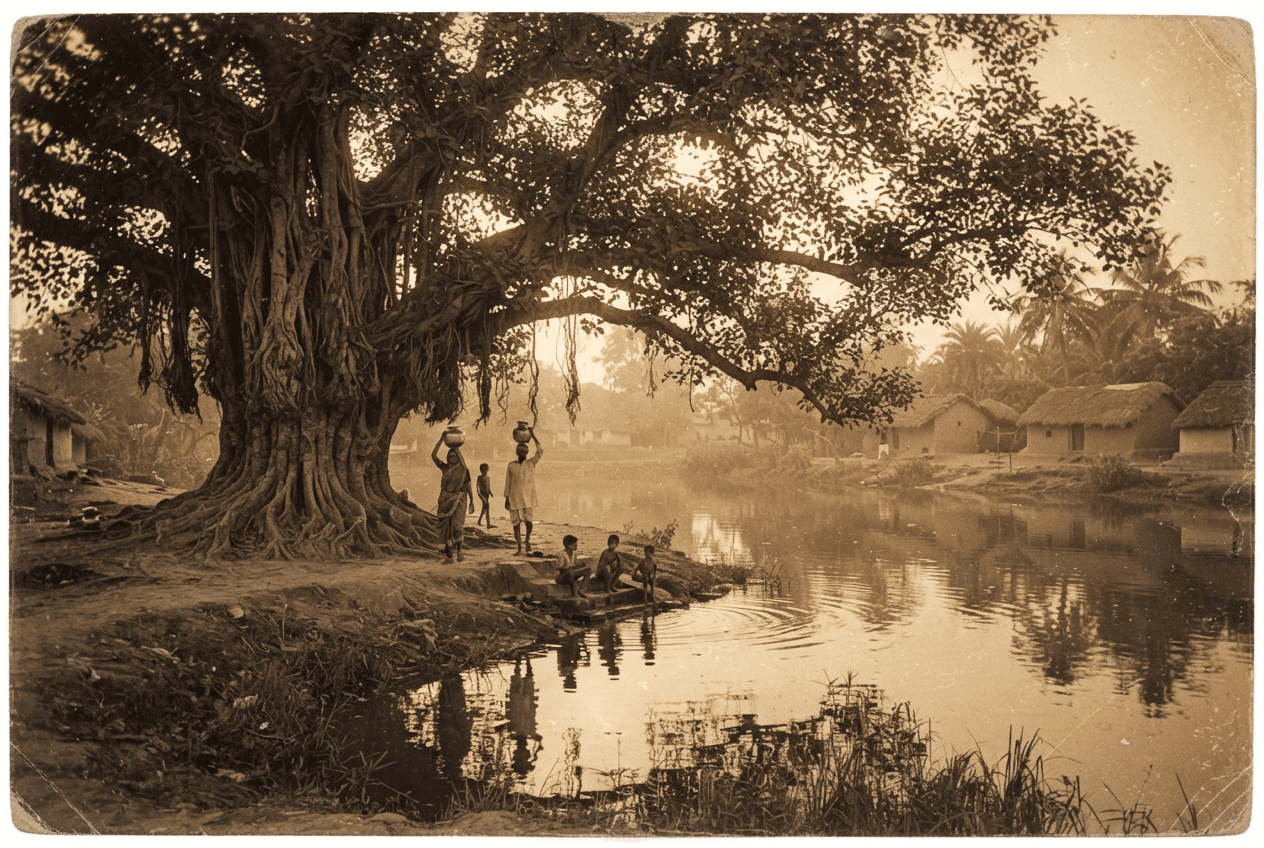
The sun still rises over our small village, spreading light across the fields. Its light reaches our home too, falling on the quiet corner where my father sits. He is an old man now, but what weighs on him is not simply age. It is a hurt that has never really gone away.
He was a man who lived a simple life, close to the soil and the people around him. As an Ayurvedic doctor, his hands were always busy—crushing herbs, preparing medicines, and mixing them with care. He never charged the poor. They paid only for the herbs, if they could, and their gratitude was enough for him. He was well respected in the village and in the surrounding areas. People knew him as a doctor they could turn to when they had nowhere else to go.
He was the third of four brothers, but from a young age, life made him take on responsibilities beyond his years. His mother passed away when he was still a small boy, and he grew up between my grandfather’s care and his aunt’s loving home. When he was old enough to continue his education, his elder brother helped him. My father never forgot that support, and spent much of his life trying to repay it.
After he became a doctor, his responsibilities only grew. He began looking after not just his own family, but the needs of his brothers as well. He provided for everyone without complaint. For many years, his earnings were more than half of what all four brothers brought in together, and much of the family depended on what he earned.
He rarely thought about himself. When the family needed land, he was the first to contribute, putting in more than half the cost. He knew that one day the land would be divided equally among the four brothers. What he did not think about was what that would mean for his own three sons. The money he put into the family land could have meant a larger share for them, more security for their future, perhaps even a piece of land they could have built their own lives on. But he never looked at it that way. For him, the land belonged to the family, and the family needed it. He gave what he had, while his own sons quietly gave up a little of what could have been theirs.
Then came the new temple. It was built without my father’s involvement, a project planned and carried out by the others. My father gave only a small amount towards it. He did not say much, but we could sense that he was hurt and that something between the brothers had changed.
For as long as I could remember, every family invitation—weddings, festivals, blessings—had carried the names of all four brothers. It was something we had always taken for granted. But this time, when the invitation arrived, my father’s name was missing. It was difficult to believe that after all the years he had stood by the family, his name could simply be left out. He did not say anything, but we could see how deeply it had affected him.
The silence in our home was heavy. My brothers and I were furious. We wanted to confront them and ask why they had left our father’s name off the invitation. But my father stopped us.
“It is their way of thinking,” he said. His voice was calm, but his eyes were somewhere else. “I cannot change them.”
The hurt was deep, yet he still went to the temple’s opening ceremony. He sat among the others, quietly watching the ceremony, though he knew his name had been left out. We watched him from a distance. The man who had spent most of his life standing by the family now sat there almost like an outsider.
He did not complain. He did not ask anyone why. He simply stayed until the ceremony was over.
Perhaps that was the hardest part for us to see—not his anger, but his acceptance of something he had never expected from his own family.
Reader Reflections
Reader comments are quietly reviewed and moderated by the author before appearing on the page.
“really thoughtful”